
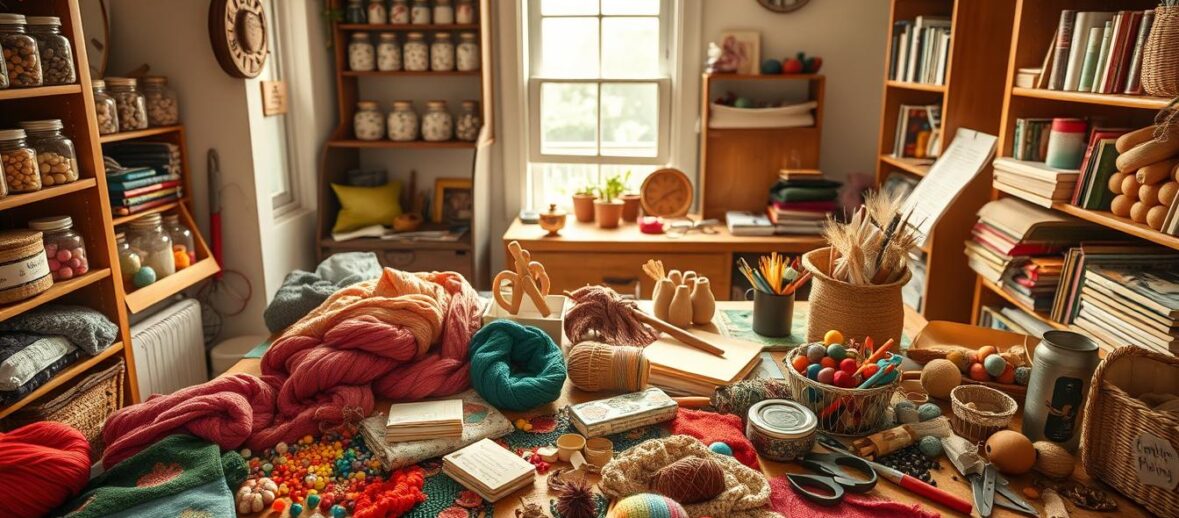
Imagine finding a calm spot in our busy digital world. Slow crafting is more than a hobby. It’s a choice against fast living. Your hands connect creativity and mindfulness, making simple moments special.
Crafting has grown from just a hobby. It’s now a way to reconnect with yourself and slow down. It lets you create things that share your story. This guide will show you how crafting can change your life.
In a world full of fast products and quick fixes, slow crafting is a different path. You’ll discover how to grow your creativity, lower stress, and connect with old making ways.
Key Takeaways
- Discover the therapeutic benefits of mindful crafting
- Learn techniques that promote mental wellness
- Understand the connection between creativity and personal growth
- Explore sustainable and intentional making practices
- Transform everyday crafting into a meditative experience
What Are Slow Crafting Trends and Why They Matter
Slow crafting is more than just making things. It’s a mindful way to create that challenges our fast world. It focuses on making things with care and purpose.
In today’s digital age, slow crafting is a strong counter to constant digital noise. It turns crafting into a journey of discovery. You connect with materials and grow your creativity.
Understanding the Mindful Making Movement
The mindful making movement is built on a few key ideas:
- Creating with purpose, not just for mass production
- Valuing the art of handmade
- Finding calm in the act of crafting
- Choosing materials that are sustainable and fair
Slow crafting lets you create something meaningful. It connects you to old skills and lets you express yourself.
The Rise of Underconsumption Core in Crafting
Underconsumption core is a new way of thinking about crafting. It asks you to:
- Focus on making things that last, not just making more
- Find new uses for things you already have
- Stand against a throwaway society
- Keep learning and improving your skills
Crafting is a way to show your values. It’s a way to stand up against commercialism and celebrate your own creativity.
The Mental Health Benefits of Rhythmic and Repetitive Crafts
Crafting is more than making pretty things. It’s a way to improve your mental health. Rhythmic and repetitive crafts help lower stress and bring calm.
Slow crafting puts your brain in a meditative state. This leads to several mental health benefits:
- Reduces anxiety and depression symptoms
- Lowers cortisol stress levels
- Increases dopamine production
- Enhances overall emotional regulation
Neurological research shows that activities like knitting or crocheting create a flow state. This state is like meditation, where your mind relaxes but stays focused.
“Crafting is cheaper than therapy,” says Dr. Sarah Johnson, a mental health researcher specializing in creative interventions.
Your brain gets a reward from consistent, gentle movements. The rhythm of crafts relaxes and heals your emotions. By spending time on slow crafting, you’re caring for your mental health.
Slow Crafting Trends Taking Over in 2025
The crafting world is changing in 2025. It’s mixing old styles with new ideas. Your crafting journey is about to get more exciting as new trends come in. These trends connect your personal style with mindful making.
Crafting enthusiasts are finding new ways to express themselves. They’re using unique aesthetic movements that go beyond old craft practices.
Exploring Aesthetic Craft Movements
Two trends are really catching crafters’ eyes:
- Coquette Aesthetic: Soft, romantic crafting with delicate pink tones and vintage-inspired designs
- Dark Academia: Scholarly, moody crafts featuring antique books, deep colors, and intellectual themes
Rediscovering Traditional Craft Techniques
Crafters are going back to old skills. They’re learning from their grandparents and great-grandparents. This revival celebrates handmade traditions and sustainable creating.
- Hand-knitting vintage patterns
- Embroidery with classic motifs
- Quilting using inherited fabric collections
Your craft space can become a personal sanctuary of creativity. It can mix modern aesthetics with timeless making techniques.
Fiber Crafts: Knitting, Crochet, and Punch Needle
Fiber crafts are a great way to relax and get away from digital screens. They connect you to old traditions and offer a calming creative space. Knitting, crochet, and punch needle let you slow down and make something beautiful by hand.
Let’s look at what makes each craft special:
- Knitting: Creates fabric by interlocking yarn with two needles
- Crochet: Uses a single hook to create intricate textile patterns
- Punch Needle: Produces textured designs by punching yarn through fabric
Learning these crafts takes time and effort. Here’s what you need to start:
- Comfortable yarn or embroidery threads
- Appropriate needles or hooks
- Simple beginner patterns
- Online tutorials or local craft workshops
“Crafting is not about perfection, but about personal expression and joy.”
Starting your fiber craft journey can be a calming ritual. It helps reduce stress and brings you back to the present moment. Whether you’re making cozy sweaters or wall hangings, these crafts are a meaningful way to step away from screens and tap into your creativity.
Paper and Card Crafting for Deliberate Creation
Explore the world of paper crafting, where creativity and mindfulness come together. It’s a way to slow down, express yourself, and make something beautiful by hand.
Paper crafting is more than a hobby; it’s a meditative practice. It connects you with your inner creativity. “35 Step-by-Step Projects” by Mari Ono shows how a simple sheet can turn into something magical.
Origami: The Art of Precise Folding
Origami turns paper into intricate designs with precise techniques. You can make stunning objects like:
- Delicate paper cranes
- Elegant flowers
- Complex geometric shapes
This craft teaches patience and precision. Each fold is a moment of mindful creation.
Junk Journaling: Sustainable Creativity
Junk journaling uses what you have—like old tickets and scraps—instead of buying new supplies. It’s a sustainable, creative, and budget-friendly way to craft.
Your junk journal becomes a personal archive. It captures memories with:
- Vintage ticket stubs
- Magazine clippings
- Fabric scraps
- Personal ephemera
The dopamine menu trend often features beautifully illustrated journal pages. These pages spark joy and creativity.
Quilting and Embroidery as Meditative Practices
Crafting is more than making beautiful things. It’s a way to find peace and focus. Quilting and embroidery are special ways to calm your mind and find a meditative state.
These textile arts help you enter a flow state. This state lowers stress and boosts your mental health. The back-and-forth of needle and thread turns crafting into a moving meditation.
- Quilting lets you focus on precise patterns
- Embroidery involves creating detailed designs with careful stitches
- Both crafts need your full attention, quieting your mind
People who craft mindfully find these activities very calming. Each stitch is a moment of being present. It helps you step away from digital noise and connect with yourself.
“In quilting, every thread tells a story of patience and intention.” – Traditional Craft Wisdom
Whether you’re new or skilled, quilting and embroidery are great for your mind and creativity.
Nature-Based and Kitchen Crafts for Slow Living
Slow living is about connecting with nature and being mindful. Your crafting can turn simple moments into special experiences. Nature gives us amazing materials and ideas for projects that make us feel good.
Looking into natural materials opens up new creative paths. You can find unique ways to craft that connect you with nature and your creativity.
Sustainable Crafting with Natural Elements
- Foraged botanical crafts
- Wildcrafted natural dye techniques
- Wood carving and whittling
- Clay and pottery from local clay sources
Kitchen crafts also offer a way to slow down. Fermenting, preserving, and making homemade goods links you to old crafting ways. These activities turn simple things into special items that show patience and skill.
Kitchen Craft Techniques to Explore
- Sourdough bread making
- Herbal tea blending
- Fruit and vegetable preserving
- Artisan cheese crafting
Your crafting journey is a meditation on creativity, sustainability, and connection. Each natural material has a story, waiting for you to shape it into something special.
Getting Started: Resources and Ideas for Learning Slow Crafts
Starting slow crafting can seem daunting, but many resources make it fun and easy. Whether you’re new or want to improve, there’s a lot to discover.
- 35 Step-by-Step Projects by Mari Ono for paper crafting techniques
- Fairytale Blankets to Crochet by Lynne Rowe for beautiful crochet patterns
- Crochet for Baby by Zoe Dobson for adorable infant projects
- Cozy Cottagecore Crafts for nature-inspired creative ideas
Your local library is full of crafting knowledge. It offers free access to craft books, letting you try new things without spending. Online platforms like YouTube, Skillshare, and Creativebug have video classes for different crafts.
Community resources are key to your crafting journey. Look into:
- Local yarn shops offering knitting and crochet classes
- Craft stores like Michaels and Joann hosting workshops
- Community centers with craft groups
- Emerging craft clubs for cozy nights of creative exploration
Don’t worry if your crafts aren’t perfect. Crafting is about having fun, not making art for museums. Start small, be kind to yourself, and remember each step is a part of learning.
Conclusion
Exploring slow crafting is more than just a hobby. It’s a way to change how you think and feel. Every stitch and fold connects you to mindful practices that boost your mental and emotional health.
Crafts like knitting, embroidery, quilting, and paper arts are more than skills. They are ways to discover yourself. By spending time on these crafts, you find a calm in a busy world.
Slow crafting isn’t about being perfect. It’s about enjoying the process and expressing yourself through your work. It’s about creating something that shows who you are.
Begin with small steps and be kind to yourself. Let your craft journey grow at its own pace. Your hands will learn, your creativity will grow, and you’ll feel proud of what you make.