
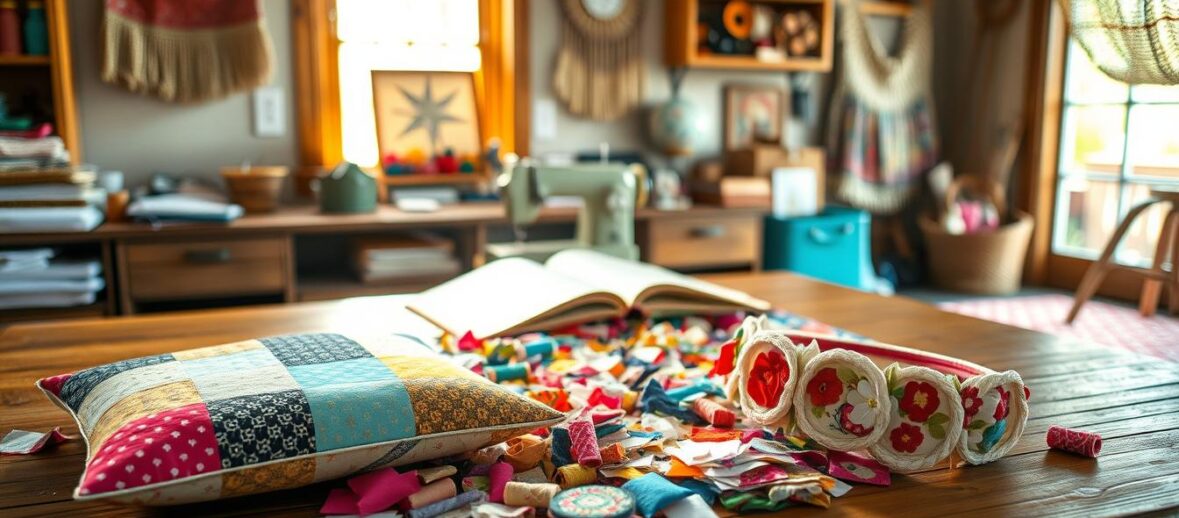
Every sewing enthusiast knows the magic of creativity with fabric scraps. It’s not just about saving waste. It’s about making something amazing from small pieces.
Ever felt overwhelmed by your scrap fabric pile? You’re not alone. This guide will show you how to make beautiful, useful projects from these scraps.
Scrap fabric projects are more than a hobby. They’re a green way to craft, saving money and reducing waste. Your leftover fabric can become your best creative tool, from quilts to home decor.
Key Takeaways
- Learn innovative ways to repurpose fabric scraps
- Discover storage solutions for organizing remnants
- Reduce waste while creating unique crafts
- Save money by maximizing every fabric piece
- Unlock your creative potential with minimal materials
Why You Should Start Using Your Fabric Scraps Today
Textile waste is a huge problem for our planet every day. Millions of tons of fabric go to landfills each year. This creates big ecological issues. By recycling and repurposing fabric scraps, you can help solve this problem from your own craft space.
Your small actions can make a big difference. By reusing fabric scraps, you’re doing more than saving materials. You’re also making a statement about sustainable crafting.
The Environmental Benefits of Repurposing Fabric
- Reduce textile waste in landfills
- Minimize carbon footprint from fabric production
- Conserve natural resources used in textile manufacturing
- Decrease demand for new fabric production
“Every fabric scrap saved is a step towards a more sustainable future.” – Sustainable Fashion Experts
Save Money While Creating Unique Projects
Repurposing fabric scraps is good for the environment and your wallet. It lets you:
- Save money by not buying new fabric
- Create unique accessories
- Make special craft projects
- Reduce your crafting expenses
Your creativity can turn small fabric pieces into valuable and meaningful projects. These projects show off your skills and support sustainable practices.
How to Sort and Store Your Fabric Scraps
Organizing your fabric scraps makes sewing easier. A good storage plan turns messy scraps into a creative treasure trove.
Keep your storage simple and easy to reach. This makes sewing with scraps fun and convenient.
Organizing Scraps by Color for Easy Access
Color-coded storage is a big plus for crafters. Sorting by color helps you:
- Find fabrics quickly
- Get inspired for new projects
- Work more efficiently
Best Storage Solutions for Different Scrap Sizes
Scrap sizes need different storage solutions. Here’s how to manage your fabric scraps:
| Scrap Size | Storage Recommendation | Best Container |
|---|---|---|
| Large Scraps (Fat Quarter) | Fold and stack | Clear plastic bins |
| Medium Scraps | Roll or file | Rolling craft cart |
| Small Scraps | Collect in basket | Fabric or mesh container |
Choose clear storage to see your fabrics easily. Clear plastic containers from Target or Walmart are great. A rolling cart is mobile, while shelves offer permanent storage.
Pro Tip: Always keep your storage system simple. If it’s too complicated, you won’t maintain it.
The best storage is one you’ll use. Try different methods until you find the perfect fit for your crafting style and space.
What Size Fabric Scraps Are Worth Keeping
Choosing which fabric scraps to keep can be tricky. Not every scrap fits every project. Knowing what to save is key for your crafts.
Most crafters agree on a size range for scraps:
- Minimum size: 2 inches by 2 inches
- Maximum size: 10 inches by 10 inches
- Special strips: At least 1 inch wide and several inches long
Scraps smaller than 2×2 inches are limited. But don’t throw them away. They’re great for:
- Stuffing pincushions
- Creating pattern weights
- Making small decorative elements
Larger pieces, from 2 to 10 inches, are perfect. They’re ideal for:
- Patchwork projects
- Zipper pouches
- Mug rugs
- Quilt block accents
For pieces bigger than a fat quarter, store them with your yardage. A tip: Use long, skinny strips for string quilts and twine projects!
Creative Scrap Fabric Projects for Beginners
Turning leftover fabric into beautiful items is fun and rewarding. It’s great for sewing newbies or those who want to cut down on waste. These easy projects will help you make something special from fabric scraps.
Quick and Easy Patchwork Ideas
Patchwork is perfect for beginners. Start with small projects to build your skills and confidence.
- Mug rugs and coasters using 2-3 inch fabric squares
- Decorative pincushions to organize your sewing space
- Table runners with coordinating fabric strips
Crafting Fabric Twine from Leftover Strips
Turning narrow fabric strips into twine is a clever idea. Here’s a simple technique to transform your scraps:
- Collect strips at least 1-inch wide
- Fold strips lengthwise and sew along the edge
- Connect multiple strips to create longer twine
Your handmade fabric twine can be used in many ways, like:
- Gift package decorations
- Woven basket handles
- Decorative trivets
- Bag straps
Other quick projects include reusable makeup wipes, fabric scrunchies, and small zipper pouches. Each one takes under 30 minutes. They give you instant satisfaction and help reduce waste.
Using Your Fabric Scraps for Quilting Projects
Quilting turns your fabric scraps into beautiful works of art. These leftover pieces are not just random bits. They are waiting to be turned into something amazing. Scrap fabric projects in quilting let you give new life to these small treasures.
There are many ways to use scrap quilting techniques to make unique designs:
- String quilts using foundation paper
- Log cabin block designs
- Postage stamp quilts with tiny squares
- Color-themed patchwork patterns
Start by sorting your scraps by color or size. This makes planning your quilt easier. Vintage-inspired quilts often look most charming when fabrics seem randomly assembled. This creates a fun, eclectic look.
Some popular quilting approaches for scrap fabric projects include:
- Courthouse Steps variations
- Rainbow Connection strip patterns
- Traditional log cabin configurations
Your scrap quilts can be any size, from lap blankets to full bed coverlets. The beauty of these projects is their unique character. No two scrap quilts will ever be the same!
Practical Sewing Projects That Use Minimal Fabric
Turning fabric scraps into useful items is a fun DIY challenge. You can make useful household items and thoughtful gifts with a bit of creativity and basic sewing skills.
Exploring upcycled fabric DIY reveals many ways to use small fabric pieces. Here are some practical and exciting project ideas to help you reduce waste and create something meaningful.
Reusable Household Items from Scraps
Your fabric scraps can replace disposable products in your home with these innovative projects:
- Fabric napkins in coordinating colors
- Reusable makeup remover wipes
- Pattern weights for sewing projects
- Eco-friendly cleaning cloths
Pro tip: Even 4″ x 4″ fabric squares can be transformed into useful items!
Small Accessories and Gift Ideas
Create personalized gifts and accessories using minimal fabric with these upcycled fabric DIY suggestions:
- Fabric scrunchies
- Small zipper pouches
- Triangular baby bibs
- Dog collars and leashes
- Decorative flag garlands
“One person’s fabric scraps are another person’s creative opportunity!” – Crafting Wisdom
These projects not only save money but also reduce textile waste. You’ll create unique, personalized items that show off your creativity.
String Quilts and Strip Piecing Techniques
Turning fabric scraps into beautiful quilts is an art. It mixes creativity with being resourceful. String quilts and strip piecing are great for using leftover fabric strips.
String quilts are a magical way to reuse small fabric pieces. You layer and sew fabric strips to make stunning patchwork designs.
- Collect strips of various widths (1-4 inches)
- Choose a foundation material (paper or fabric)
- Layer strips diagonally or straight across
- Sew and press each strip in sequence
Strip piecing has many ways for quilters. The log cabin method builds blocks around a central square. The Courthouse Steps variation creates a geometric pattern.
| Technique | Strip Width | Complexity |
|---|---|---|
| Traditional String Quilt | 1-2 inches | Beginner |
| Log Cabin | 2-3 inches | Intermediate |
| Courthouse Steps | 1-4 inches | Advanced |
“Every scrap tells a story. String quilting is about preserving memories, one strip at a time.” – Quilting Artisan
Your scraps can become treasured quilting masterpieces. Embrace the imperfections, mix colors boldly. Watch your unique quilt design come to life.
How to Decide Which Scraps to Keep or Donate
Repurposing fabric scraps doesn’t mean keeping every single piece of fabric you’ve ever owned. Learning to curate your collection can transform your creative process and reduce overwhelming clutter in your craft space.
Your fabric scrap collection should inspire, not intimidate. Experienced crafters recommend periodic scrap audits to keep your materials fresh and motivating.
Letting Go of Uninspiring Fabrics
When evaluating your fabric scraps, ask yourself these key questions:
- Would I purchase this fabric today?
- Does this piece spark my creativity?
- Have my design preferences changed?
Repurposing fabric scraps becomes easier when you focus on materials that genuinely excite you. Letting go isn’t wasteful—it’s strategic.
Where to Donate Unwanted Scraps
Instead of holding onto uninspiring fabrics, consider these donation options:
- Local quilt guilds
- Community art programs
- School crafting classes
- Online crafting communities
Your “meh” fabric might be someone else’s creative treasure!
By maintaining a curated collection of repurposing fabric scraps you truly love, you’ll find yourself more inspired and productive in your crafting journey.
Organizing Precut Scrap Sizes for Future Projects
Strategic scrap organization is key to taking your fabric remnant ideas to the next level. Precut sizes make preparing for projects quick and easy.
Quilters and crafters love having fabric scraps ready for spontaneous creativity. The most useful precut sizes are:
- 2½-inch squares
- 2½-inch strips
- 5-inch charm squares
- 1½-inch strips for tiny projects
When starting a project, take a minute to cut scraps into standard sizes. This small step greatly benefits future fabric remnant ideas.
Keeping your precuts organized is crucial. Here are some storage ideas:
- Clear shoe boxes
- Photo storage containers
- Color-coded labeled bins
Pro tip: Label each container clearly, like “2½-inch Squares – Blues” or “Strips – Warm Tones”. This makes finding what you need for your next project easy.
Smart scrap management turns leftover fabric into a treasure trove of creative possibilities!
Conclusion
Turning fabric scraps into something special is a game-changer. What seemed like waste can become a world of creative possibilities. Your scraps are not just leftovers; they’re full of potential, waiting for your imagination.
Getting started is easy. Sort your scraps by color, keep pieces over 2 inches, and let go of anything that doesn’t excite you. With a good system, your scraps can turn into beautiful quilts or useful items for your home.
Using fabric scraps is more than just crafting. It’s about reducing waste, saving money, and making things that hold special meaning. Whether it’s making reusable napkins or a quilted gift, you’re helping the planet.
Begin with small goals. Try to finish one project a month. Soon, you’ll see your scraps not as a problem but as a chance to explore and create. Your scraps are an open door to endless possibilities in your crafting world.
61 Responses
It is truly a nice and helpful piece of information. I am happy that you just shared this helpful info with us. Please stay us informed like this. Thanks for sharing.
I like what you guys are up too. Such clever work and reporting! Carry on the superb works guys I have incorporated you guys to my blogroll. I think it’ll improve the value of my website 🙂
This is a topic close to my heart cheers, where are your contact details though?
It is the best time to make some plans for the future and it’s time to be happy. I have learn this publish and if I could I desire to counsel you some fascinating things or tips. Maybe you could write next articles relating to this article. I wish to read even more things approximately it!
Howdy! This post could not be written any better! Reading this post reminds me of my good old room mate! He always kept talking about this. I will forward this post to him. Pretty sure he will have a good read. Thanks for sharing!
Hi there very nice blog!! Guy .. Excellent .. Amazing .. I will bookmark your site and take the feeds also…I am satisfied to seek out so many helpful information right here within the put up, we’d like work out extra strategies on this regard, thank you for sharing. . . . . .
I was suggested this web site through my cousin. I am now not positive whether or not this submit is written by him as no one else know such specified approximately my difficulty. You’re incredible! Thanks!
I do agree with all the ideas you have presented in your post. They’re very convincing and will definitely work. Still, the posts are too short for beginners. Could you please extend them a bit from next time? Thanks for the post.
I will immediately seize your rss as I can not to find your email subscription link or e-newsletter service. Do you’ve any? Please let me realize so that I may just subscribe. Thanks.
Well I truly liked reading it. This information procured by you is very useful for correct planning.
I am no longer certain where you’re getting your info, however good topic. I must spend a while learning more or understanding more. Thank you for wonderful info I used to be looking for this info for my mission.
I respect your work, thankyou for all the informative articles.
Hello! I just would like to give a huge thumbs up for the great info you have here on this post. I will be coming back to your blog for more soon.
Your place is valueble for me. Thanks!…
Thanks a bunch for sharing this with all of us you really recognise what you are speaking approximately! Bookmarked. Please additionally consult with my web site =). We will have a link change contract between us!
I do enjoy the manner in which you have presented this particular situation plus it does indeed provide us a lot of fodder for thought. However, because of what I have observed, I simply just hope as the opinions pile on that people today keep on issue and in no way start on a soap box involving some other news du jour. Anyway, thank you for this exceptional point and even though I can not really concur with this in totality, I regard your standpoint.
This is a topic close to my heart cheers, where are your contact details though?
I’ve recently started a web site, the info you provide on this site has helped me tremendously. Thank you for all of your time & work.
I am not rattling fantastic with English but I line up this really easygoing to understand.
I’ve learn some just right stuff here. Definitely worth bookmarking for revisiting. I surprise how a lot effort you set to create one of these wonderful informative web site.
I like this post, enjoyed this one regards for posting. “To affect the quality of the day that is the art of life.” by Henry David Thoreau.
Very interesting details you have mentioned, regards for posting. “The only thing worse than a man you can’t control is a man you can.” by Margo Kaufman.
There is visibly a lot to know about this. I think you made various good points in features also.
Loving the info on this site, you have done great job on the content.
Thanks for every other informative web site. The place else may I get that type of information written in such an ideal manner? I have a undertaking that I’m just now working on, and I have been on the glance out for such info.
I will right away grab your rss feed as I can not to find your e-mail subscription link or newsletter service. Do you have any? Kindly allow me recognize so that I may just subscribe. Thanks.
It’s truly a great and helpful piece of information. I am glad that you just shared this useful information with us. Please stay us informed like this. Thank you for sharing.
Very interesting points you have noted, thankyou for putting up.
Have you ever considered creating an e-book or guest authoring on other websites? I have a blog centered on the same information you discuss and would really like to have you share some stories/information. I know my viewers would appreciate your work. If you’re even remotely interested, feel free to shoot me an email.
Hello. magnificent job. I did not expect this. This is a excellent story. Thanks!
I enjoy looking at and I believe this website got some genuinely utilitarian stuff on it! .
I love the efforts you have put in this, thanks for all the great blog posts.
Wonderful work! This is the type of information that should be shared around the web. Shame on the search engines for not positioning this post higher! Come on over and visit my site . Thanks =)
This is a very good tips especially to those new to blogosphere, brief and accurate information… Thanks for sharing this one. A must read article.
I do believe all the ideas you have offered to your post. They are very convincing and will definitely work. Still, the posts are too brief for beginners. May you please prolong them a bit from next time? Thank you for the post.
I get pleasure from, cause I found just what I was taking a look for. You’ve ended my four day long hunt! God Bless you man. Have a nice day. Bye
I am glad to be one of several visitors on this great internet site (:, thanks for posting.
I am also writing to make you be aware of what a superb encounter my friend’s child enjoyed browsing your web page. She came to understand so many pieces, with the inclusion of what it’s like to possess a wonderful coaching character to have certain people completely fully understand specified tricky issues. You undoubtedly did more than people’s expectations. Many thanks for delivering such interesting, trustworthy, educational and also unique tips on your topic to Sandra.
I love it when people come together and share opinions, great blog, keep it up.
he blog was how do i say it… relevant, finally something that helped me. Thanks
I have been exploring for a bit for any high-quality articles or blog posts on this kind of area . Exploring in Yahoo I at last stumbled upon this site. Reading this info So i’m happy to convey that I have an incredibly good uncanny feeling I discovered exactly what I needed. I most certainly will make certain to do not forget this web site and give it a glance regularly.
Yeah bookmaking this wasn’t a risky determination great post! .
You completed certain nice points there. I did a search on the subject matter and found the majority of people will agree with your blog.
Yeah bookmaking this wasn’t a risky decision outstanding post! .
I truly enjoy reading through on this website , it has got wonderful blog posts.
I genuinely enjoy reading on this internet site, it contains great articles. “He who sees the truth, let him proclaim it, without asking who is for it or who is against it.” by Henry George.
Very nice style and great content material, practically nothing else we want :D.
I’ve been surfing online more than three hours these days, yet I by no means found any fascinating article like yours. It is beautiful price sufficient for me. Personally, if all webmasters and bloggers made just right content as you probably did, the net will be a lot more helpful than ever before. “When there is a lack of honor in government, the morals of the whole people are poisoned.” by Herbert Clark Hoover.
Thank you for any other informative website. Where else may just I get that kind of info written in such a perfect means? I’ve a challenge that I am just now operating on, and I have been at the glance out for such information.
Sweet web site, super design and style, rattling clean and utilise genial.
I am impressed with this website , very I am a big fan .
I am not really great with English but I find this very easygoing to interpret.
Magnificent site. Plenty of helpful information here. I’m sending it to a few buddies ans additionally sharing in delicious. And of course, thanks for your sweat!
Some genuinely quality posts on this internet site, bookmarked.
Would you be interested in exchanging links?
Hello, i think that i noticed you visited my site so i got here to “go back the desire”.I’m trying to in finding things to improve my website!I assume its ok to use a few of your concepts!!
I’m writing to let you know what a awesome discovery my friend’s daughter developed using your site. She mastered plenty of things, which include what it is like to have an amazing coaching style to get many others without difficulty completely grasp various advanced matters. You actually exceeded people’s expected results. Many thanks for showing the good, safe, informative and easy tips about this topic to Janet.
I got what you mean , regards for putting up.Woh I am thankful to find this website through google.
I would like to thnkx for the efforts you have put in writing this blog. I am hoping the same high-grade blog post from you in the upcoming as well. In fact your creative writing abilities has inspired me to get my own blog now. Really the blogging is spreading its wings quickly. Your write up is a good example of it.
Very interesting info !Perfect just what I was looking for!
Awsome article and straight to the point. I am not sure if this is really the best place to ask but do you people have any thoughts on where to get some professional writers? Thanks 🙂