
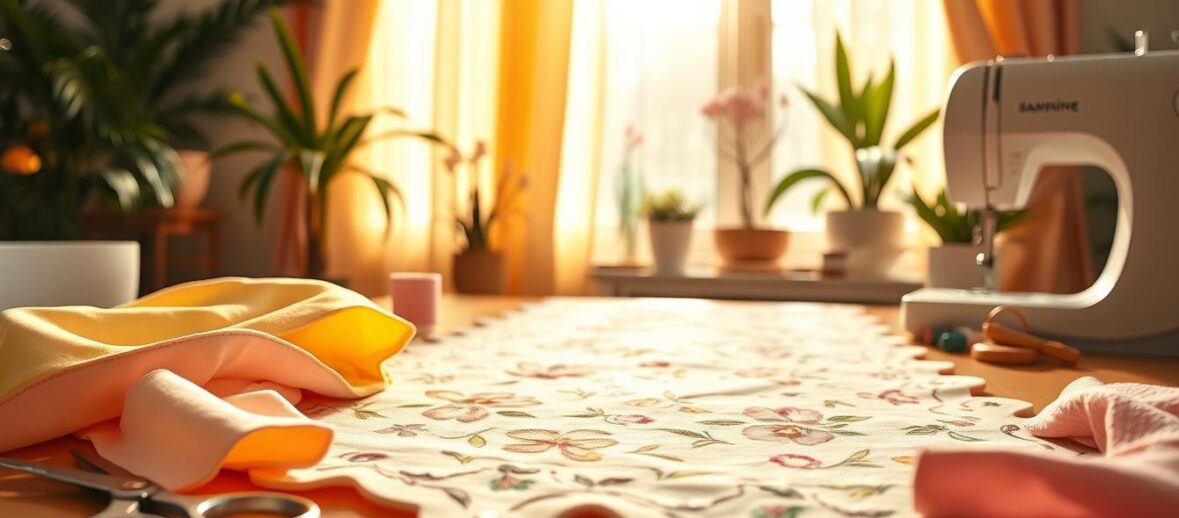
Spring is the perfect time to refresh your home decor. A stunning handmade table runner can capture the vibrant essence of the season. Whether you’re an experienced crafter or a beginner, creating your own table runner can transform your dining space.
This DIY project lets you personalize your home decor with fresh colors and patterns of spring. With a few simple materials and some creativity, you’ll craft a unique piece. It will reflect your personal design aesthetic and bring warmth to your dining area.
Key Takeaways
- Learn to create a custom spring table runner with easy techniques
- Discover versatile fabric choices for seasonal decor
- Understand basic sewing and no-sew methods for crafting
- Explore ways to personalize your table runner design
- Gain confidence in home crafting skills
Why Spring Table Runners Transform Your Dining Space
A spring table runner does more than just decorate your dining area. It brings fresh life to your home. It makes your dining space vibrant and welcoming, celebrating the season’s renewal.
Your dining area becomes a colorful and textured canvas. It shows the beautiful awakening of spring.
Let’s explore how these decorative pieces can completely revitalize your dining environment:
- Instant visual refresh for your dining room
- Affordable way to update your home decor
- Adds personality and seasonal charm
- Creates a focal point on your dining table
Spring table runners are very versatile. They can turn a simple meal into a memorable dining experience. You can choose from subtle pastels or bold botanical prints. These pieces let you show your personal style while capturing spring’s essence.
| Decor Impact | Emotional Response |
|---|---|
| Color Introduction | Mood Elevation |
| Texture Variation | Sensory Engagement |
| Seasonal Representation | Emotional Connection |
By choosing a spring table runner, you’re not just decorating. You’re creating an experience. This experience welcomes the season’s warmth and vitality into your home.
Choosing the Perfect Fabric for Your Spring Table Runner
Choosing the right fabric is key to making a stunning spring table runner. The right fabric can turn a simple project into a beautiful centerpiece. It captures the essence of the season.
First, understand fabric weight. Quilting cotton is 4-5 oz, making it light and great for spring designs. Medium-weight cotton is 5-7 oz, offering more structure. Canvas is 7-12 oz, perfect for busy dining areas.
Best Fabric Types for Spring Projects
- 100% Cotton: Breathable and easy to work with
- Linen Blend: Adds texture and natural elegance
- Lightweight Canvas: Provides durability with a crisp finish
- Quilting Cotton: Ideal for intricate patterns and designs
Spring Color Palettes Trending This Year
This year, spring palettes focus on soft, nature-inspired colors. Imagine a palette with:
- Sage Green: Subtle and calming
- Dusty Blue: Serene and sophisticated
- Warm Terracotta: Earthy and inviting
- Buttery Yellow: Cheerful and bright
The “new neutrals” like warm beiges, soft grays, and creamy whites are great backgrounds. Botanical greens, from deep forest to pale celery, are also popular. They bring the outdoors inside.
For beginners, start with pre-coordinated fabric collections. Choose a main fabric, often a large floral print. Then, pick 2-3 supporting fabrics in solid or small-scale prints. Remember to pre-wash fabrics in cold water, dry on low, and press before cutting. This prevents shrinkage and color bleeding.
Remember, the best fabric is the one that speaks to your personal style and makes you smile!
Essential Supplies and Tools You’ll Need
To make a beautiful spring table runner, you need the right stuff. Start by picking out the best supplies. They will turn your dining area into a seasonal wonder.
Basic Sewing Supplies
- Fabric: 1.5 to 3 yards (depending on your table size)
- Coordinating thread (polyester or cotton)
- Fabric scissors or rotary cutter
- Cutting mat (18 x 24 inches recommended)
- Clear quilting ruler (6 x 24 inches)
- Straight pins or fabric clips
- Iron and ironing board
- Sewing machine with standard presser foot
Optional Sewing Enhancements
- Batting or interfacing
- Decorative trim (pom-poms, tassels, ribbon)
- Bias tape for binding edges
- Embroidery floss for detailed stitching
Joann Fabrics, Hobby Lobby, and Michaels have most of what you need. If you’re watching your budget, you’ll find that basic stuff costs $20-$30. Cotton fabric is $8-$15 per yard, and thread is $3-$5 per spool.
Helpful Tip: Always check your sewing machine manual and test stitches on fabric scraps before starting your project!
No-Sew and Embellishment Options
- Fabric glue (Aleene’s Fabric Fusion)
- Hot glue gun
- Artificial flowers and greenery
- Ribbon and buttons for decorative touches
It’s okay if you’re missing a few things. Crafting is all about being creative and flexible. Many crafters already have the basics, so you might just need to buy fabric to start.
Create a Beautiful Table Runner for Spring: Step-by-Step Instructions
Making a spring table runner is easy. You can create a beautiful piece in just minutes. Whether you’re new to crafting or have experience, these steps will guide you. You’ll make a runner that brings a fresh look to your spring decor.
Measuring Your Table for the Perfect Fit
Getting the right measurements is key for a professional table runner. Here’s how to measure:
- Measure your table’s length from end to end
- Decide on your desired overhang (6-12 inches on each side)
- Calculate width by dividing table width by three
Pro tip: You can make a simple runner with just 1 yard of fabric. This makes the project budget-friendly and quick.
Sewing Machine Method for Beginners
The “5 Minute Table Runner” technique is easy for beginners. Follow these steps:
- Cut two complementary fabric pieces with extra seam allowance
- Pin fabrics right sides together
- Sew around the perimeter, leaving a small opening
- Turn and press the runner
- Topstitch for a professional finish
No-Sew Options Using Fabric Glue
Don’t sew? No problem! You can make a stunning runner with fabric glue or kraft paper. These no-sew options are great for quick decor updates:
- Use fabric glue to create clean, crisp edges
- Paint a kraft paper runner with watercolor designs
- Add trim with fabric glue for extra flair
Tip: Runners should reach the full length of the table or longer for a dramatic overhang that creates visual interest.
Customizing Your Runner with Floral Embellishments and Spring Details
Turn your table runner into a vibrant spring masterpiece with creative embellishments. These add a nature-inspired charm to your dining space. Personal touches make your runner truly unique and eye-catching.
Fresh Flower Accent Techniques
Add fresh flowers for a stunning visual impact. Use small water tube holders to attach delicate blooms like tulips and daffodils. Pro tip: This works best for special occasions and short-term displays.
Artificial Greenery Arrangements
For a lasting decoration, craft a beautiful greenery accent with these materials:
- 2-3 stems of artificial lamb’s ear
- 4-6 boxwood sprigs
- 2-3 spring flower sprays
- Floral wire and wire cutters
Cut stems into 4-6 inch pieces, arrange in a pleasing cluster, and secure with floral wire. Attach to runner ends for an instant spring transformation.
Fabric and Decorative Embellishments
- Rolled fabric roses in spring colors
- Appliqué designs featuring butterflies or flowers
- Embroidered accents like lazy daisy stitches
- Pom-pom or ribbon trim
Easter-Inspired Customization
Add seasonal flair with pastel-colored decorative elements:
| Decoration Type | Technique |
|---|---|
| Egg Accents | Attach small wooden or plastic eggs |
| Text Details | Add “Happy Easter” with fabric paint |
| Symbolic Motifs | Include crosses or spring lamb designs |
The magic is in the details. Don’t be afraid to experiment and let your creativity shine through your personalized table runner!
Sizing Guidelines for Different Table Shapes and Dimensions
Creating the perfect table runner is an art of visual balance. Table runner proportions are flexible guidelines, not strict rules. Your personal style matters most—some decorators prefer dramatic long overhangs, while others love a minimal, modern approach.
Understanding table runner sizing helps you create an intentional, polished look. The key is selecting a runner that complements your table’s shape and size without overwhelming the space.
Rectangular and Oval Table Runner Basics
Rectangular and oval tables share similar runner sizing principles. These elongated shapes work beautifully with runners that create a central visual path.
- 48-inch table (4 seats): 60-72 inch runner, 12-14 inches wide
- 60-inch table (6 seats): 72-84 inch runner, 14-16 inches wide
- 72-inch table (6-8 seats): 84-96 inch runner, 16-18 inches wide
- 84-inch table (8 seats): 96-108 inch runner, 18-20 inches wide
- 96-inch table (8-10 seats): 108-120 inch runner, 20-22 inches wide
Width Calculation Pro Tip
Use this simple formula: Table width ÷ 3 = Runner width. This ensures your runner creates a centered path while showcasing your table surface.
Round and Square Table Strategies
Round and square tables offer unique runner placement opportunities. For round tables, consider a classic straight runner or get creative with an “X” pattern. Square tables look stunning with diagonal or centered runners.
“The perfect table runner transforms your dining space from ordinary to extraordinary.” – Home Decor Experts
Remember, these guidelines are starting points. Measure your specific table and trust your design instincts. Slight variations add charm to handmade table decor.
Conclusion
Making a spring table runner is more than a craft. It’s a way to add your personal style and the joy of the season to your home. By picking the right spring fabrics and following easy steps, you can make your dining area special with a piece that shows off your creativity.
Choosing to sew or use fabric glue, you’ll learn skills that help with many projects. You’ll get to measure, cut, and add your own touches. This makes your runner fit your table and your style perfectly.
Spring is a time for new beginnings. What’s better than making something beautiful with your own hands? Your handmade table runner will not only protect your table but also show off your crafting skills. Start simple, enjoy the learning, and see your confidence grow with each step.
Are you ready to start? Get your supplies ready this weekend and begin your spring table runner project. Remember, every expert was once a beginner. The joy of making something unique is worth all the effort. Your dining space is about to get a fresh, personal touch that store-bought items can’t match.
One Response
Hey! I understand this is kind of off-topic but I had
to ask. Does running a well-established blog such as yours take a lot of work?
I’m brand new to writing a blog but I do write in my
diary every day. I’d like to start a blog so I can easily
share my experience and views online. Please let me know if you have
any kind of recommendations or tips for new aspiring bloggers.
Thankyou!