
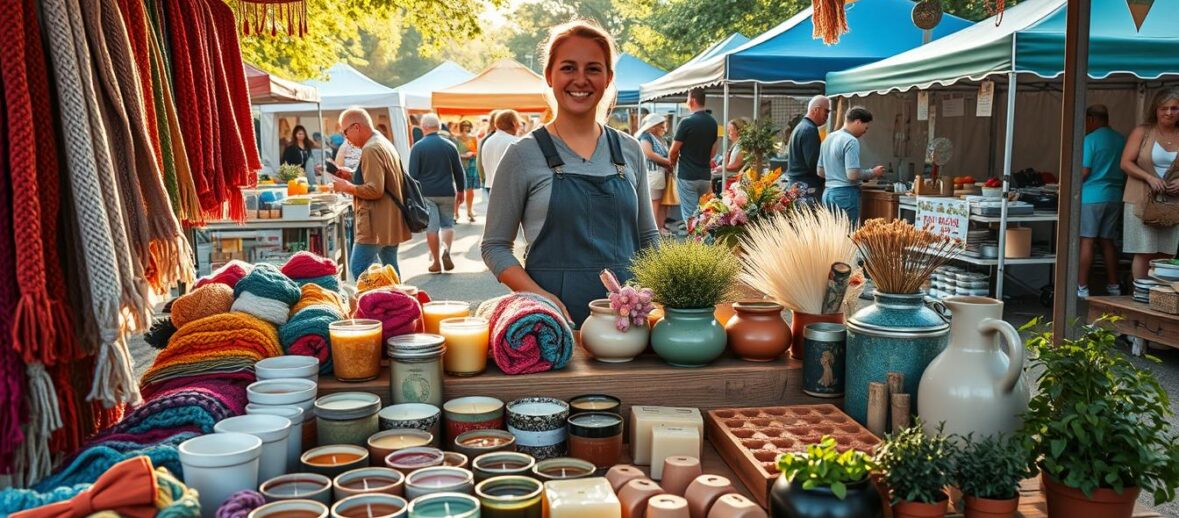
Selling your handmade products at a farmers market can lead to real income and customer connections. You meet people who value quality and craftsmanship. Your unique items can stand out among mass-produced goods.
Farmers markets bring together community members looking for fresh and authentic products. This setting is perfect for creative entrepreneurs like you. You can build a loyal customer base while doing what you love.
Starting your farmers market journey doesn’t require expensive startup costs. Many successful vendors began with simple products made in their kitchens or home studios. Your passion for creating quality items is the real foundation for success.
This guide will walk you through everything you need to know. You’ll learn which products sell best at markets. You’ll discover how to price your items and set up an attractive booth. Legal requirements and marketing strategies are covered to help you succeed.
Key Takeaways
- Farmers markets offer direct sales opportunities for handmade products without high overhead costs
- Popular items include baked goods, natural beauty products, candles, and textile crafts
- Understanding food safety laws and product regulations keeps your business compliant
- Proper pricing covers your materials and labor while staying competitive
- Booth presentation and customer relationships drive repeat business and referrals
- Brand building and social media presence expand your reach beyond market days
- Planning and organization lead to profitable and sustainable farmers market ventures
Why Handmade Crafts Thrive at Farmers Markets
Farmers markets are special places for your handmade crafts to shine. They attract people who love quality and personal touches. Selling here means you reach customers who value unique, local items.
Your products really stand out here. Shoppers come for unique, one-of-a-kind items not found in big stores. They want to hear the story behind their purchases and meet the maker. This builds trust and loyalty for your business.
The market atmosphere helps your business in many ways:
- Customers look for local, artisan goods
- Direct feedback helps improve your products
- Word-of-mouth marketing spreads naturally
- You build relationships with regular shoppers
- Your brand story becomes part of the shopping experience
Being part of the community is key at farmers markets. Shoppers feel good supporting small businesses and local creators. Your presence helps the market grow, attracting more people who love handcrafted items.
Pricing your goods works well here too. Market shoppers understand that quality costs. They respect your work and the time, skill, and materials you put into each piece.
The farmers market environment is perfect for showcasing your handmade crafts. It connects you with customers who truly appreciate what you make.
Crafts and Homemade Items to Sell at a Farmers Market
Farmers markets are great for selling your handmade crafts and homemade items. People want real, quality products made by you. Focus on items that are unique and meet a need. Let’s look at three popular categories that do well at farmers markets in the United States.
Baked Goods and Treats
Baked goods are a top seller at farmers markets. Your fresh breads, cookies, and pastries attract many. Customers love the taste of homemade baking.
Consider offering these popular items:
- Artisan breads and sourdough loaves
- Decorated cookies and brownies
- Seasonal pastries and pie
- Gluten-free and vegan baked options
- Granola and granola bars
Make sure your baked goods are fresh on market day. Fresh treats taste better than day-old ones. Use clear containers so buyers can see your work.
Homemade Jams, Jellies, and Preserves
Canned jams and preserves are popular for natural alternatives to store-bought spreads. Your homemade versions have real fruit and less sugar.
Popular preserve options include:
- Fruit jams made with strawberries, blueberries, and peaches
- Specialty jellies with unique flavors
- Fruit butters and spreads
- Hot pepper jellies and savory preserves
- Infused honey and fruit syrups
Show your jars with attractive labels. Offer small sample spoons for tasting. This can increase your sales a lot.
Natural Beauty Products
Beauty and body products made from natural ingredients attract health-conscious shoppers. Your handmade soaps, lotions, and bath products are appealing to those avoiding harsh chemicals.
Best-selling beauty items at farmers markets include:
- Cold-process and handmade soaps
- Natural lip balms and salves
- Organic body lotions and creams
- Bath bombs and bath salts
- Essential oil blends and aromatherapy products
Use beautiful packaging and natural scents to stand out. Customers like learning about your ingredients and how you make each product. Share your ingredient list and explain the benefits of natural formulations.
Popular Craft Items That Sell Well
Your success at the farmers market comes from picking items people want. The best items solve problems or make life easier. Certain crafts always do well at markets across the U.S.
Smart sellers know which items draw in buyers. Your booth should stand out with valuable products. Let’s look at the top-selling craft items at farmers markets.
Handmade Candles and Soaps
Candles and soaps are big hits at farmers markets. They’re loved for their natural ingredients and custom scents. They offer a nice alternative to store-bought items.
Why do candles and soaps do well? They’re:
- Popular gifts all year
- A luxury that’s still affordable
- Appeal to health-conscious buyers
- Unique scents bring back customers
- Easy to carry and display
Textile Crafts and Fabric Items
Handmade textiles attract shoppers looking for one-of-a-kind pieces. Your products might be quilts, pillows, scarves, or tote bags. People love the craftsmanship and personal touch.
Textile vendors succeed by focusing on:
- Using high-quality, durable fabrics
- Choosing eye-catching colors
- Creating designs that are both functional and beautiful
- Offering personalization options
Wooden and Laser-Cut Products
Wooden and laser-cut items are big sellers at farmers markets. Customers love the natural beauty and durability of wood. Laser-cutting adds detailed designs that hand-carving can’t match.
Popular items include:
- Cutting boards and kitchen accessories
- Decorative wall signs
- Jewelry and small accessories
- Home organization items
- Gift boxes and specialty containers
These items do well because they’re high-quality, unique, and support local makers.
Garden and Plant-Related Products
Garden and plant-related products are very popular at farmers markets. People like buying plants and gardening supplies from local sellers. They know what grows well in their area.
Customers want plants that do well in their local soil and weather. You can grow seedlings in your garden or greenhouse. Then, sell them at farmers markets all season. Many shoppers prefer buying from growers who can give care tips and recommend the best varieties.
Think about offering a variety of garden-related products to attract different customers:
- Vegetable seedlings (tomatoes, peppers, herbs, lettuce)
- Flower plants and perennials
- Succulent plants and cacti
- Hanging baskets and potted arrangements
- Homemade plant fertilizers and natural pest control solutions
- Garden markers and plant labels
- Seed packets with heirloom varieties
- Potting soil and gardening soil mixes
You can also make handmade gardening supplies to go with your plant sales. Wooden plant stands, decorative pots, and custom garden signs are great. They add value to your booth and help customers care for their plants.
Start with plants that grow easily in your climate. As your business grows, add more plants based on what customers want and what sells well at your market.
Understanding Legal Requirements for Selling at Markets
Selling handmade goods at farmers markets is more than just bringing your products. You must follow certain rules and regulations. These laws keep your customers safe and protect your business. Knowing what your local government requires helps you avoid fines and legal issues.
Different products have different rules. Food items and beauty products need special attention. First, you need to get the right licenses and permits.
Food Product Regulations and Licensing
If you sell food like baked goods or jams, you must follow food safety laws. The FDA and your state’s department of agriculture set these rules. Most states require a food handler license for anyone selling food.
Here’s what you typically need:
- Food handler certification or food safety training
- Business license from your city or county
- Home kitchen approval (for some states)
- Proper food labeling with ingredients and allergen information
- A commercial or licensed kitchen for preparation
Check with your state’s health department for specific requirements. Some states allow cottage food operations from home kitchens. Others require a commercial kitchen. Contact your local farmers market manager to learn their rules too.
Beauty and Body Product Compliance
Selling natural beauty products, soaps, or candles requires different steps. The FDA regulates cosmetics and body products differently than food. You need to follow labeling rules and ingredient disclosure requirements.
Your beauty product checklist includes:
- FDA cosmetic product registration
- Ingredient lists on all labels
- Business license and tax ID
- Product liability insurance
- Proper storage and safety information
Keep detailed records of your ingredients and suppliers. This helps if customers have questions about your products. It also protects you legally.
Pricing Your Handmade Products for Profit
Setting the right price for your handmade items is crucial. Many new sellers struggle because they don’t fully understand their costs. Your prices must cover materials, labor, and overhead. This ensures you can keep making the products people love.
Pricing is more than just numbers. It’s about showing your value to customers. At farmers markets, people are willing to pay for quality. You need to show them why your products are worth it.
Calculating Material and Labor Costs
First, figure out what your products cost to make. For example, a candle might cost $3 in materials, 20 minutes of labor at $15/hour, and $2 in overhead. This means you should sell it for at least $15-$18 to make a profit.
Break down your costs into three main parts:
- Materials needed to create each item
- Labor time at a fair hourly rate
- Overhead expenses like booth rental, packaging, and utilities
Don’t forget about overhead costs. Many makers overlook these, which can hurt profits. Knowing your true costs helps you price confidently.
Competitive Pricing Strategies
It’s important to know what others charge. But don’t let their prices dictate yours. Look at what similar vendors sell for similar products and quality.
But, don’t just undercut others’ prices. This can lead to a race to the bottom, hurting everyone. Cheaper isn’t always better, especially if it means you can’t pay yourself or buy quality materials.
Instead, focus on justifying higher prices through quality, unique designs, or great customer service. If your candles smell amazing, your lip balms are organic, or your service is top-notch, customers will notice. They’re willing to pay more for real value.
Offering products at different price points can help. For example, you could have $5 lip balms and $25 gift sets. This way, everyone can find something they can afford.
Psychological pricing strategies can also work. Using $19.99 instead of $20.00 can make a difference to shoppers, even if it’s just a little. Small price changes can boost sales without hurting your profits.
Keep your prices the same everywhere. Regular customers trust you when they know they’ll pay the same price. If you need to raise prices, do it for everyone, not just at certain venues.
Set your prices once and stick to them. Constantly changing based on what others do can be stressful. Trust your calculations and own your pricing decision.
Setting Up Your Booth for Maximum Sales
Your farmers market booth is your first impression. Shoppers decide quickly if they want to check out your handmade items. An inviting display can make a big difference in sales.
Choose the right spot at your market. Corner spots and areas near the entrance get more foot traffic. Place baked goods near drinks and natural beauty products near herbal items.
Display your crafts at eye level. This way, customers can easily see your best items. Use risers, shelves, and stands to add height. This makes your booth more interesting and helps customers find what they want.
Remember these display tips:
- Clean, neutral-colored tablecloths that don’t compete with your products
- Clear price tags written in large, readable fonts
- Lighting solutions for early morning or shaded locations
- Small samples when appropriate—encourage customers to taste or touch items
- Business cards and contact information displayed prominently
Organization is key. Group similar items together for easy comparison. Make sure you have enough stock to look full but not cluttered.
Keep your booth clean all day. Messy displays can make customers think your products are low quality. Showing you care about your crafts and their experience can make a big difference.
Marketing Your Products Before and During Market Days
To get your handmade crafts noticed, you need a good plan. Start by sharing your work on social media like Instagram and Facebook. Post clear photos in good lighting and share the story behind your items. When people see your passion, they want to support you.
Plan your marketing weeks in advance. Make a schedule for posting updates about your booth. Use local groups and apps to spread the word. Talk about what makes your products special and why shoppers should visit.
Building Customer Connections
Building real relationships turns buyers into loyal customers. Smile and greet visitors warmly. Ask about their needs and share how you make your products. Let them touch and smell items when possible.
Collect email addresses from interested shoppers. Send updates about new products and discounts. Thank customers with a personal note. These actions build lasting bonds.
- Chat genuinely with every visitor
- Share your crafting process
- Remember repeat customers
- Offer samples when appropriate
- Ask for feedback on your products
Creating Your Brand Presence
Your brand makes your products stand out. Design a simple logo that represents your business. Use the same colors and style on all materials. Create business cards and hang tags for your items.
Make your booth look good. Arrange products neatly on attractive displays. Use natural lighting and small decorations that match your brand style. A professional booth builds trust and encourages purchases.
- Develop a memorable business name
- Design consistent branding materials
- Take quality photos of your products
- Set up an attractive booth display
- Create social media accounts for your business
Conclusion
Farmers markets are great places to sell handmade crafts. You can sell baked goods, jams, candles, soaps, textiles, wooden items, and garden products. This article has given you a clear plan to start your own farmers market business.
Understanding legal rules and pricing is key to success. It helps protect your business and ensures you make a fair profit. You now have the knowledge to move forward with confidence.
Starting a farmers market business takes effort. You’ll need to research laws, figure out costs, practice setting up your booth, and be there every time. Don’t let this stop you. Many vendors have found success with hard work and planning.
Good booth setup and connecting with customers are crucial. They turn a hobby into a successful business. You’ll face challenges like bad weather, slow sales, and tough customers. But, the joy of being your own boss and sharing your creativity is worth it.
If you’re new, start small. Begin with one or two products at one market a month. As you get more experience and confidence, you can grow. The farmers market community is supportive and helpful.
Take the first step today. Look into local farmers markets and talk to organizers about being a vendor. Start making your products and getting the necessary licenses. Commit to your first market date. Every successful vendor started where you are now.
Your talents deserve to be shared. People are eager to find unique, handmade items. The farmers market is waiting for you. It’s time to show off your beautiful handcrafted products and start your dream business.