
This website contains affiliate links. As an Amazon Associate, I earn from qualifying purchases at no extra cost to you.
Have you ever held a piece of jewelry that seemed to tell a story? Handmade jewelry is not just beautiful. It’s also filled with creativity and love. You can make necklaces, bracelets, and earrings that show off your style.
Starting your DIY jewelry making journey is easy. With the right tools and supplies, you can create lasting pieces. This guide will give you everything you need, from a complete list of supplies to step-by-step tutorials. You’ll enjoy making something beautiful with your own hands, whether it’s a simple bracelet or a more complex design.
Get ready for a fun and rewarding journey in jewelry crafting. Your creativity is ready to shine. With this guide, you’ll have all the tools you need to make it happen.
Key Takeaways
- Handmade jewelry offers a unique way to express your creativity.
- Having the right supplies is essential for crafting quality pieces.
- This guide provides easy-to-follow tutorials for beginners.
- You can turn your hobby into a potential source of income.
- Jewelry making can be a fun and fulfilling activity.
Essential Tools for DIY Jewelry Making
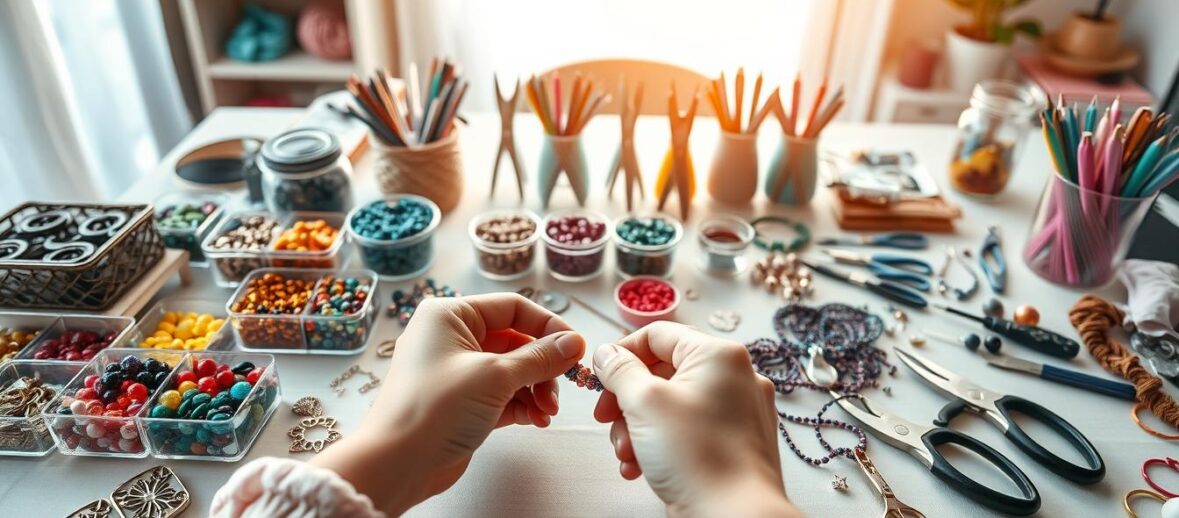
Starting your DIY jewelry making journey? You’ll need the right tools. These tools will make creating beautiful pieces easy. Whether you’re new or have some experience, knowing the basics will improve your crafting.
Basic Jewelry Pliers and Their Uses
Jewelry pliers are a must-have. They help you work with wire and findings. Here are the main types:
- Cutting Pliers: Ideal for cutting wire and other materials.
- Flat-Nose Pliers: Great for gripping and bending wire. Look for ones with nylon tips to avoid scratches.
- Round-Nose Pliers: Perfect for creating loops and curves in wire.
Measuring and Cutting Tools for Precision
Precision is key in DIY jewelry making. The right measuring tools ensure your pieces fit perfectly. Consider these options:
- Rulers: Useful for measuring lengths accurately.
- Calipers: Excellent for measuring small dimensions and thicknesses.
- Scissors: Handy for cutting string and cord.
Adhesives and Their Applications in Jewelry Crafting
Adhesives are crucial for assembling your jewelry. Different materials need specific glues:
- Super Glue: Best for metal and hard surfaces.
- Fabric Glue: Ideal for attaching fabric elements.
- Jewelry Adhesive: Designed specifically for jewelry-making projects.
With these essential tools, you’re set to start your DIY jewelry making projects. Each tool has a unique purpose, helping you create stunning designs efficiently.
Understanding Jewelry Findings and Their Importance
Jewelry findings are key parts that keep your pieces together. They might be small, but they’re vital. You’ll learn about jump rings, clasps, and pins here. Knowing these will help you make jewelry with confidence and style.
Common Types of Findings: Jump Rings, Clasps, and Pins
Here are some common jewelry findings you’ll find:
- Jump Rings: These circular metal rings connect different parts of your jewelry. They come in various sizes and gauges.
- Clasps: Clasps secure your jewelry. Popular types include lobster clasps and bolt rings.
- Pins: Head pins, eye pins, and ball pins are used to attach beads and other decorative elements.
- Crimp Beads: These are used to secure stringing materials, providing a strong hold.
- Bails: Bails allow you to hang pendants from chains or cords.
How to Choose the Right Findings for Your Project
Choosing the right findings is key for your jewelry crafting lessons. Here are some tips:
- Choose findings that match the style of your jewelry. For example, use elegant clasps for formal pieces.
- Ensure the size of the findings is appropriate for your project. Smaller pieces may require smaller jump rings.
- Think about the material. Choose findings that complement your chosen beads and cords.
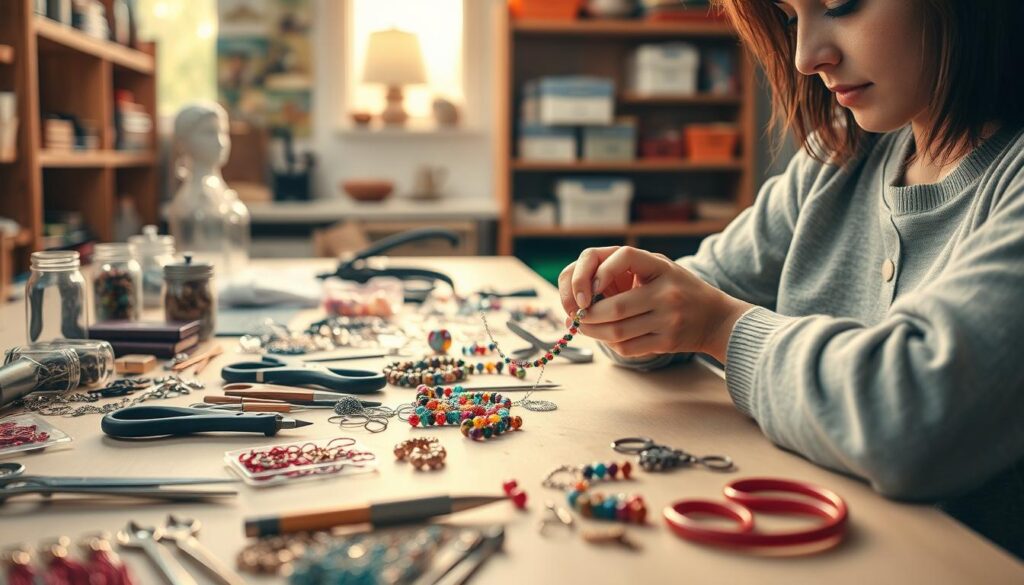
With this knowledge, you can confidently select the right findings for any project. These small components will help you create stunning jewelry pieces that showcase your unique style.
Cord, String, Wire, and Chain: Selecting Your Base Materials
Choosing the right base materials is key to making stunning jewelry. The materials you pick will affect the look, feel, and durability of your pieces. Knowing about cords, strings, wires, and chains is crucial for mastering beaded jewelry techniques.
Different Types of Cords and Their Uses
There are many types of cords, each with its own special qualities:
- Hemp Cord: A natural fiber that’s strong and eco-friendly, great for casual designs.
- Leather Cord: Adds a rustic and elegant touch, perfect for statement pieces.
- Polyester Cord: Durable and resistant to wear, ideal for everyday jewelry.
Variations in Stringing Wire and Metal Chains
Stringing wire and metal chains come in many styles and strengths. Here are some options:
- Nylon Wire: Flexible and easy to work with, great for intricate designs.
- Silk Thread: Offers a luxurious feel, perfect for delicate pieces.
- Metal Chains: Available in different finishes, suitable for both casual and formal jewelry.
Understanding these materials will improve your beaded jewelry techniques. You can make beautiful and lasting pieces by choosing the right materials for your beads or pendants. Whether you like a casual hemp bracelet or an elegant silver chain necklace, your choices show your style.
Handmade jewelry tutorials: Step-by-Step Crafting Lessons
Making your own jewelry is very rewarding. With the right help, you can make beautiful pieces that show off your style. This section has easy-to-follow handmade jewelry tutorials for beginners.
Beginner Jewelry Making Tutorials for Beaded Bracelets
Begin with simple beaded bracelets. These are great for beginners and need just a few supplies. Here’s how to start:
- Gather your materials: beads, elastic or nylon thread, and scissors.
- Measure your wrist to figure out the bracelet’s length.
- String the beads onto the thread, making your pattern.
- Finish by tying secure knots to keep the beads in place.
Wire Wrapping and Loop Making Techniques
When you’re ready, try wire wrapping and loop making. These skills make your designs look professional. Here’s how to begin:
- Choose your wire and cut it to the right length.
- Create a loop at one end with round-nose pliers.
- Wrap the wire around your beads or findings, securing them.
- End with another loop at the other end to connect your piece.
These tutorials give you clear, step-by-step instructions. You can improve your skills and make unique pieces that show your creativity. Enjoy the journey and have fun making!
Beads, Pearls, Charms, and Decorative Elements
Welcome to the colorful world of jewelry making! Here, you’ll learn about various decorative parts that make your pieces pop. Knowing about beads, pearls, and charms is key to making stunning designs. Follow these easy steps to improve your crafting skills.
When it comes to beads, the choices are endless. Here are some popular materials you might consider:
- Glass Beads: These are versatile and come in various colors and shapes.
- Gemstone Beads: Known for their natural beauty, these add elegance to any design.
- Acrylic Beads: Lightweight and affordable, perfect for beginners.
Cultured pearls are another beautiful option. They come in different varieties, including:
- Akoya Pearls: Classic and round, ideal for timeless pieces.
- Freshwater Pearls: Available in various shapes
- South Sea Pearls: Rare and exotic, perfect for unique designs.
Charms and pendants can make your jewelry personal. Use jump rings to attach them easily. Here are some tips:
- Choose charms that reflect your personality or interests.
- Mix and match different shapes and sizes for a playful look.
- Use sequins or other decorative elements to add sparkle.
Adding these decorative elements will make your homemade jewelry truly stand out. Experiment with different combinations and let your creativity shine!
Jewelry Accessories and Organization Tips
Keeping your jewelry-making supplies organized is key. A clean workspace lets you dive into your craft without distractions. Here are some must-have accessories and tips to keep your space tidy while you work on beginner jewelry making tutorials.
Bead Boards, Mats, and Storage Solutions
Choosing the right tools can make crafting easier. Here are some items to consider:
- Bead boards: These keep your beads organized as you design.
- Craft mats: They protect your surface and offer a non-slip area for supplies.
- Storage boxes: Organize beads and findings by size or color for quick access.
Working Efficiently With Your Supplies
To work better, try these organization tips:
- Label your storage containers so you can find things fast.
- Set up your tools and materials in a way that feels natural to you.
- Keep your most-used items close to avoid interruptions.
By using these tips, you can create a neat and inspiring workspace. This will help you stay focused on your projects and enjoy your beginner jewelry making tutorials even more.
Standard Jewelry Lengths and Design Planning
Starting your diy jewelry making journey? It’s key to know the standard lengths. This ensures your necklaces, bracelets, and anklets fit right and look great. Below, you’ll find the recommended lengths for different jewelry types. Plus, tips for planning your designs.
Recommended Lengths for Necklaces, Bracelets, and Anklets
Here are some standard lengths to consider for your pieces:
- Collar Necklace: 12-13 inches
- Choker Necklace: 14-16 inches
- Matinee Necklace: 20-24 inches
- Opera Necklace: 28-36 inches
- Rope Necklace: 36 inches and longer
- Bracelet: 7-8 inches
- Anklet: 9-10 inches
Tips for Planning and Designing Your Jewelry Pieces
Good planning makes your diy jewelry making better. Here are some tips to help you:
- Measure bead holes to choose the right string or wire.
- Sketch your designs before starting to visualize your ideas.
- Practice basic knots to secure your pieces effectively.
By following these guidelines, you can make beautiful jewelry. It will fit well and show off your unique style. Enjoy making your own stunning pieces!
Conclusion
Starting your DIY jewelry journey is an exciting adventure. This guide has given you the basics and a list of supplies. You can now make beautiful, personalized pieces at home.
Begin with simple projects to build your skills and confidence. Try different techniques and don’t be afraid to try new things. As you get better, you can add more tools to your collection.
Most importantly, enjoy the creative process. Making your own accessories is very rewarding. Dive into your jewelry crafting lessons and let your imagination shine. Happy crafting!