
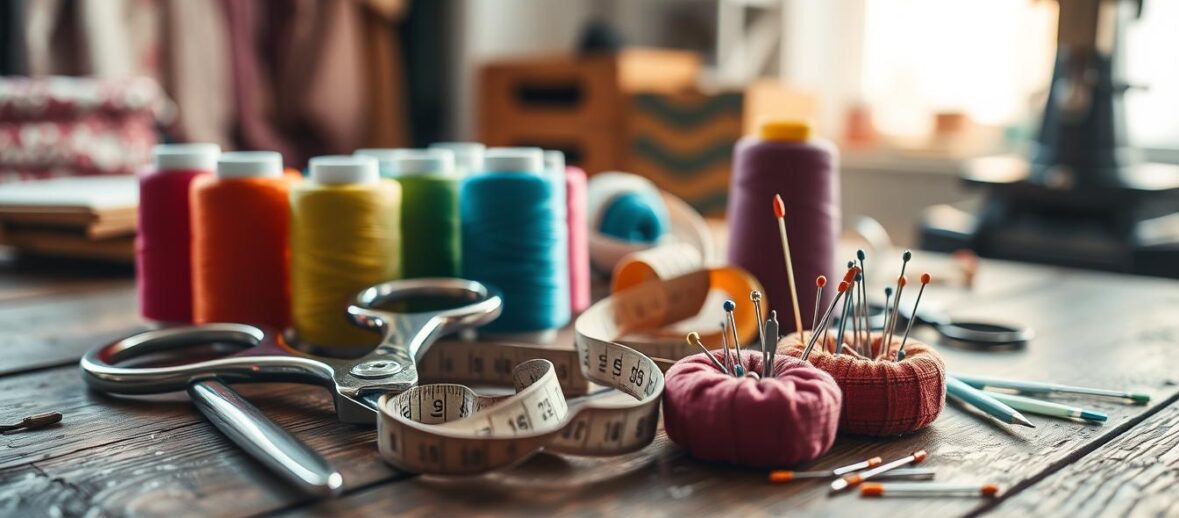
Sewing turns fabric into beautiful things. It starts with knowing the right tools for your sewing room. My favorite tools aren’t about having everything. They’re about choosing what makes your sewing better.
Professional sewists say quality tools are key. Whether you’re new or experienced, the right tools make sewing fun. This guide will show you the top tools I use every day.
Each tool, from cutting to measuring, has its own role. You’ll find tips that save time and make your work look great. These tools help you create amazing clothes, quilts, and home decor.
Key Takeaways
- Quality tools are essential for successful sewing projects
- Invest in versatile, multipurpose sewing equipment
- Organization is key to an efficient sewing workspace
- Choose tools that match your skill level and project needs
- Prioritize precision and comfort in your tool selection
Why Having the Right Sewing Tools Makes All the Difference
Sewing is an art that turns fabric into beautiful things. Your success depends on the quality of your sewing supplies. Professional sewists say that the right tools make a big difference in your work.
Quality tools do more than just make things easier. They help you do better work:
- Precise fabric cutting with sharp scissors
- Smooth needle penetration through different fabrics
- Accurate measurements for perfect fit
- Reduced hand fatigue during long sewing sessions
Think of your sewing tools as part of your creative vision. Cheap tools create frustration, but good tools let you create with confidence. A good pair of scissors can replace many bad ones.
Quality tools are an investment in your creativity, not an expense.
You don’t have to spend a lot to get good tools. Start with a few key supplies that work well. Tools like scissors, measuring tape, needles, and pins are important. As you get better, you’ll see how these tools make sewing easier and more fun.
Great sewing is about enjoying the process and making something special. The right tools can make this journey fun and rewarding.
Essential Cutting Tools Every Sewist Needs
Choosing the right cutting tools is key when you’re starting your sewing collection. The right scissors, rotary cutters, and snips can make your sewing look like a pro did it.
Your cutting tools are the base for getting your fabric ready right. Professional sewists say that good cutting tools really make a difference in how your projects turn out.
Bent-Handled Fabric Scissors for Precision Cutting
Bent-handled fabric scissors are special for sewists. They offer a few big benefits:
- Blade lies flat on cutting surface for maximum control
- Ergonomic design reduces hand fatigue
- All-metal construction provides durability
Professional-grade scissors like Gingher shears are a great choice for your sewing tools.
Rotary Cutters and Self-Healing Mats
Rotary cutters change the game for modern sewists. With self-healing mats, they make clean cuts on all kinds of fabrics.
- Olfa 45mm rotary cutter with quick-change blades
- Clear rulers for straight-line cutting
- Self-healing mats protect work surfaces
Small Snips for Detail Work
Small snips are the final piece of your cutting set. They’re great for:
- Trimming thread ends
- Cutting delicate seam allowances
- Intricate fabric detailing
Getting the right cutting tools means your sewing will always look sharp and professional.
My Favorite Sewing Tools for Machine and Hand Stitching
Choosing the right sewing tools can make a big difference. Whether you use an old machine or a new one, the right tools are key. They help you enjoy sewing more.
Every sewist needs certain tools for both machine and hand stitching. Here are the must-haves:
- Quality machine needles in various sizes
- Reliable thread that doesn’t break or leave lint
- Extra bobbins for seamless project transitions
- Comfortable hand sewing tools
You don’t need the most expensive sewing machine. A basic one with straight and zigzag stitches works for most projects. Look for brands like Singer, Brother, or Janome for reliable performance.
| Tool Category | Essential Items | Recommended Brands |
|---|---|---|
| Machine Sewing | Needles, Thread, Bobbins | Schmetz, Gutermann |
| Hand Sewing | Needle Threader, Thimble, Needle Case | Clover, John James |
For hand sewing, get tools that make your work easier. A needle threader can be a big help if threading needles is hard. A good thimble protects your fingers with thick fabrics. And a magnetic needle case keeps your supplies tidy.
Remember, your sewing tools are an investment in your craft. Pick quality tools that feel good and make sewing fun.
Needles That Make Sewing Easier
Quality sewing accessories can change your crafting experience. Needles are a big part of this. The right needle can turn a tough sewing session into a fun project.
It’s important to know about needle types. Each fabric and sewing method needs a specific needle. This ensures your stitches are clean and precise.
Machine Needle Varieties
Choosing the right machine needle is key. It affects how well your sewing machine works. Pick the right needle for your fabric.
- Universal needles for woven fabrics
- Ballpoint needles for knits
- Denim needles for heavy fabrics
- Stretch needles for elastic materials
Experts say to change your machine needles every 8-10 hours of sewing. Or after a big project. Worn needles can lead to bad stitches and damage your fabric.
Hand Sewing Needle Selection
For hand sewing, the right needles are crucial. They make a big difference in your work.
| Needle Type | Best For | Recommended Size |
|---|---|---|
| Sharps | General sewing | Size 7-10 |
| Embroidery | Detailed work | Size 9-12 |
| Quilting | Precision stitching | Size 8-10 |
Remember, investing in high-quality needles can greatly improve your sewing. It can also make your projects less frustrating.
Thread, Bobbins, and Why Quality Matters
Thread and bobbins might seem small, but they’re key to your sewing success. The right thread can save you hours and make your projects look great.
Not all threads are the same. Cheap threads can lead to problems:
- Frequent thread breakage
- Excessive machine lint
- Quick color fading
- Weak seams that deteriorate quickly
Polyester all-purpose thread is usually the best choice. Brands like Gutermann and Coats & Clark are reliable. Quilters might prefer Aurifil for its variety of weights.
Having a good bobbin collection is also important. Keep different thread colors ready. Wind several bobbins in neutral colors like white, black, and gray to make sewing easier.
Quality thread is an investment that pays off in smoother sewing and more durable projects.
Always match your thread to your fabric. Cotton threads are best for natural fibers. Polyester is stronger for garments that get washed a lot.
Measuring and Marking Tools You’ll Use Every Day
Precision is key for successful sewing projects. As a beginner, you’ll find that accurate measuring and clear marking are crucial. The right tools can turn your sewing from amateur to professional, helping you achieve perfect results.
Your sewing toolkit needs these essential tools. Each one is vital for creating your fabric creations with accuracy and confidence.
Flexible Measuring Tapes: Your Sewing Companion
A flexible measuring tape is your first essential tool. Look for features like:
- Retractable design for easy storage
- Locking mechanism for solo measuring
- Clear, easy-to-read markings
Rulers That Make Cutting a Breeze
Clear acrylic rulers are essential for accurate cutting. Here are top options for your sewing arsenal:
| Ruler Type | Size | Best For |
|---|---|---|
| Omnigrip Ruler | 6×24 inches | Versatile cutting |
| Square Ruler | 6×6 inches | Precise angular cuts |
| Pattern Master Ruler | Various | Garment design |
Marking Tools for Fabric Perfection
Your marking arsenal should include versatile tools for different fabrics:
- Chalk wheels from Clover – clean and adjustable
- Water-soluble fabric pens
- Tailor’s chalk in multiple colors
- Washable fabric markers
Invest in these beginner sewing tools for sewing success. Great projects begin with great preparation!
Pins, Clips, and Seam Rippers for Problem-Free Sewing
Pins, clips, and seam rippers are key to sewing well. They help keep your fabric in place and fix mistakes. These small tools can greatly improve your sewing.
Choosing the right pins is important. Glass head pins are a top pick because they don’t melt when ironed. Look for pins with these features:
- Longer pins (1.75 inches) for easier handling
- Fine pins with thin shafts for delicate fabrics
- Glass head pins for heat resistance
Pin cushions are vital for keeping your space tidy. There are many types to help manage your pins:
- Classic tomato pin cushion with emery strawberry
- Magnetic pin cushions for easy pin collection
- Thread catcher pin cushions for workspace tidiness
Sewing clips have changed how we handle fabric. Clover Wonder Clips are especially loved. They grip well without damaging your fabric.
No sewing kit is complete without a good seam ripper. While the classic blue-handled one works well, better options have replaceable blades and comfy handles. Always have one nearby – it saves time and stress.
Pressing Equipment That Creates Professional Results
Professional sewists know that pressing is key to making high-quality garments and crafts. The right sewing tools can change your projects from amateur to polished in minutes. Pressing isn’t just about removing wrinkles—it’s about shaping, defining, and perfecting your work.
Your pressing toolkit should include several key sewing accessories. These tools make a big difference in your finished pieces. The right equipment helps you get crisp seams, smooth fabric, and professional-looking results.
Irons and Portable Pressing Solutions
Choosing the right iron can greatly improve your sewing projects. Look for these essential features:
- Adjustable temperature settings for different fabric types
- Steam functionality
- Lightweight design for easy maneuvering
- Compact models for small sewing spaces
Seam Rollers and Pressing Aids
Beyond traditional irons, specialized pressing tools can take your sewing to the next level:
- Seam rollers for creating sharp, flat seams
- Pressing cloths to protect delicate fabrics
- Wool pressing mats for even heat distribution
- Tailors’ hams for curved areas
Investing in quality sewing accessories for pressing will help you achieve professional-looking results. Remember, great sewing is as much about preparation and finishing as it is about stitching.
Storage Solutions to Keep Your Sewing Room Organized
Turning your sewing room into a tidy space is key. Your sewing tools need smart storage to make crafting fun, not stressful.
Begin with easy-to-move storage for your top tools. A strong caddy or tray can be your sewing sidekick. It lets you easily switch between your workspace and cutting table with scissors, pins, and markers.
- Use clear plastic containers for thread and bobbin storage
- Install wall-mounted thread racks to display your collection
- Utilize drawer organizers for small notions
- Implement pegboards for hanging frequently used tools
Fabric storage can really change your sewing room. Transparent plastic bins help you see what you have and keep it clean. Sort fabrics by color, weight, or project to make your work easier.
| Storage Type | Best For | Benefit |
|---|---|---|
| Clear Plastic Bins | Fabric Storage | Visibility and Protection |
| Magnetic Pin Holders | Pins and Small Metallic Notions | Quick Access and Neat Storage |
| Hanging Shoe Organizers | Rulers, Scissors, Tools | Vertical Space Utilization |
The secret to a great sewing room is smart storage. Label your bins, keep your favorite tools close, and clean up often. This keeps your space inspiring and functional.
Best Sewing Equipment for Working with Different Fabrics
Choosing the right sewing tools is key when working with different fabrics. Each fabric needs special tools for professional-looking results. This prevents sewing problems.
Different fabrics need different approaches to cutting, pinning, and sewing. Your tools must match each material’s unique needs.
- Knit Fabrics: Use ballpoint needles that glide between fibers
- Delicate Silks: Choose fine, sharp needles (size 60/8 or 70/10)
- Heavy Denim: Select denim needles (size 90/14 to 100/16)
- Leather Materials: Opt for specialized leather needles
Stabilizing techniques are vital for tough fabrics. A stabilizing spray can help stretchy materials. It makes them easier to cut and sew without getting distorted.
| Fabric Type | Recommended Tools | Cutting Technique |
|---|---|---|
| Knits | Rotary cutter, ballpoint needles | Flat cutting mat, minimal lifting |
| Silk | Fine pins, sharp needles | Gentle handling, minimal pinning |
| Leather | Leather needles, sewing clips | Avoid permanent punctures |
Pro tip: Always test your tools on a small fabric scrap before starting your main project to ensure the best results.
Mastering fabric-specific techniques transforms good sewing into great craftsmanship.
Your sewing tools should be versatile and adaptable. Invest in quality tools for various fabrics. This will make your sewing projects smoother and more fun.
Where to Find Quality Sewing Tools on a Budget
Creating a great sewing space doesn’t have to cost a lot. You can find amazing beginner sewing tools without spending too much. The trick is to know where to look and find quality items at good prices.
Looking for affordable sewing tools can lead to some great finds. Let’s check out some awesome options for those on a budget.
Thrifting for Sewing Supplies
Thrift stores and estate sales are full of hidden gems for sewing tools. Many sewists donate their high-quality items, which are still in great shape. Keep an eye out for:
- Vintage fabric scissors
- Gently used sewing machines
- Cutting mats
- Measuring tools
Online Resources for Affordable Supplies
The internet is full of places to find cheap sewing equipment. Check out these online spots:
| Platform | Best For | Price Range |
|---|---|---|
| eBay | Used Sewing Machines | $20-$150 |
| Facebook Marketplace | Local Sewing Tools | $10-$100 |
| Etsy Vintage | Unique Sewing Accessories | $5-$75 |
Remember, patience is key when searching for affordable sewing tools. With some creative searching, you can build a great collection without spending a lot.
Conclusion
Sewing is an art that turns simple materials into beautiful things. Your toolkit is the start of this journey. My favorite sewing tools are not just gadgets. They are reliable friends that make sewing smoother and more fun.
Begin with the tools that really matter. You’ll need quality fabric scissors, a good seam ripper, basic needles, and a measuring tape. Remember, investing in durable tools like Gingher shears is better than buying cheap ones that won’t last.
As you get better at sewing, your favorite tools will grow with you. Each tool should feel right, serve a purpose, and match your creative vision. Whether you’re quilting, making clothes, or crafting home decor, the right tools make any project enjoyable.
Your sewing toolkit is unique—choose tools that fit your style, budget, and skill. Shop smart, look for second-hand options, and always choose quality over quantity. With time and practice, you’ll have a collection of sewing tools that reflects your creative self.
4 Responses
I have been surfing online more than 3 hours today, yet I never discovered any attention-grabbing article like yours. It is beautiful value sufficient for me. In my view, if all web owners and bloggers made just right content material as you did, the internet will likely be much more useful than ever before.
I am constantly looking online for articles that can facilitate me. Thank you!
Howdy just wanted to give you a quick heads up. The words in your post seem to be running off the screen in Firefox. I’m not sure if this is a formatting issue or something to do with web browser compatibility but I figured I’d post to let you know. The layout look great though! Hope you get the issue resolved soon. Many thanks
Great post! I’m going to share this with a friend.