
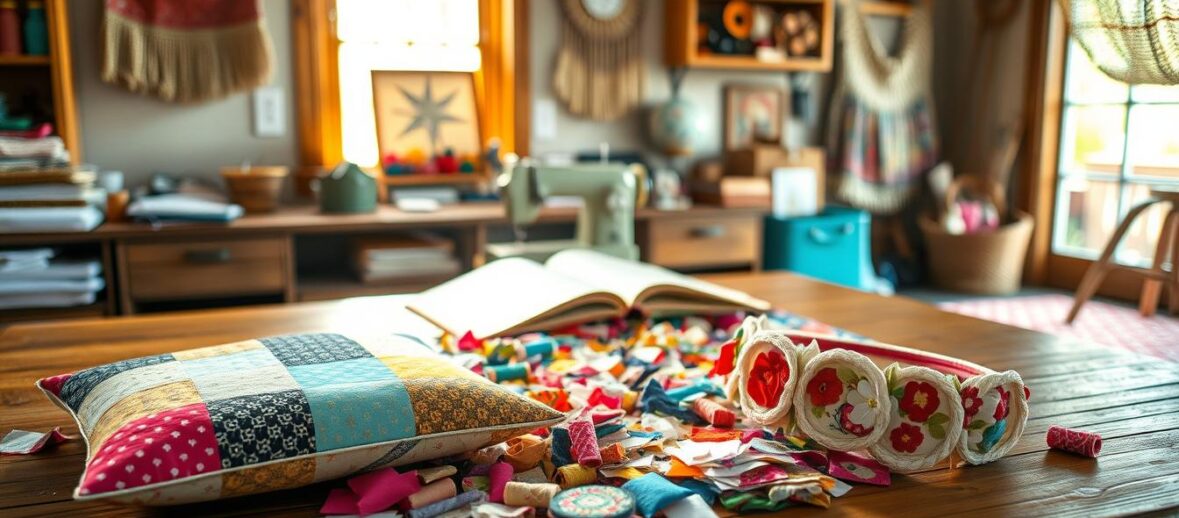
Every sewing enthusiast knows the magic of creativity with fabric scraps. It’s not just about saving waste. It’s about making something amazing from small pieces.
Ever felt overwhelmed by your scrap fabric pile? You’re not alone. This guide will show you how to make beautiful, useful projects from these scraps.
Scrap fabric projects are more than a hobby. They’re a green way to craft, saving money and reducing waste. Your leftover fabric can become your best creative tool, from quilts to home decor.
Key Takeaways
- Learn innovative ways to repurpose fabric scraps
- Discover storage solutions for organizing remnants
- Reduce waste while creating unique crafts
- Save money by maximizing every fabric piece
- Unlock your creative potential with minimal materials
Why You Should Start Using Your Fabric Scraps Today
Textile waste is a huge problem for our planet every day. Millions of tons of fabric go to landfills each year. This creates big ecological issues. By recycling and repurposing fabric scraps, you can help solve this problem from your own craft space.
Your small actions can make a big difference. By reusing fabric scraps, you’re doing more than saving materials. You’re also making a statement about sustainable crafting.
The Environmental Benefits of Repurposing Fabric
- Reduce textile waste in landfills
- Minimize carbon footprint from fabric production
- Conserve natural resources used in textile manufacturing
- Decrease demand for new fabric production
“Every fabric scrap saved is a step towards a more sustainable future.” – Sustainable Fashion Experts
Save Money While Creating Unique Projects
Repurposing fabric scraps is good for the environment and your wallet. It lets you:
- Save money by not buying new fabric
- Create unique accessories
- Make special craft projects
- Reduce your crafting expenses
Your creativity can turn small fabric pieces into valuable and meaningful projects. These projects show off your skills and support sustainable practices.
How to Sort and Store Your Fabric Scraps
Organizing your fabric scraps makes sewing easier. A good storage plan turns messy scraps into a creative treasure trove.
Keep your storage simple and easy to reach. This makes sewing with scraps fun and convenient.
Organizing Scraps by Color for Easy Access
Color-coded storage is a big plus for crafters. Sorting by color helps you:
- Find fabrics quickly
- Get inspired for new projects
- Work more efficiently
Best Storage Solutions for Different Scrap Sizes
Scrap sizes need different storage solutions. Here’s how to manage your fabric scraps:
| Scrap Size | Storage Recommendation | Best Container |
|---|---|---|
| Large Scraps (Fat Quarter) | Fold and stack | Clear plastic bins |
| Medium Scraps | Roll or file | Rolling craft cart |
| Small Scraps | Collect in basket | Fabric or mesh container |
Choose clear storage to see your fabrics easily. Clear plastic containers from Target or Walmart are great. A rolling cart is mobile, while shelves offer permanent storage.
Pro Tip: Always keep your storage system simple. If it’s too complicated, you won’t maintain it.
The best storage is one you’ll use. Try different methods until you find the perfect fit for your crafting style and space.
What Size Fabric Scraps Are Worth Keeping
Choosing which fabric scraps to keep can be tricky. Not every scrap fits every project. Knowing what to save is key for your crafts.
Most crafters agree on a size range for scraps:
- Minimum size: 2 inches by 2 inches
- Maximum size: 10 inches by 10 inches
- Special strips: At least 1 inch wide and several inches long
Scraps smaller than 2×2 inches are limited. But don’t throw them away. They’re great for:
- Stuffing pincushions
- Creating pattern weights
- Making small decorative elements
Larger pieces, from 2 to 10 inches, are perfect. They’re ideal for:
- Patchwork projects
- Zipper pouches
- Mug rugs
- Quilt block accents
For pieces bigger than a fat quarter, store them with your yardage. A tip: Use long, skinny strips for string quilts and twine projects!
Creative Scrap Fabric Projects for Beginners
Turning leftover fabric into beautiful items is fun and rewarding. It’s great for sewing newbies or those who want to cut down on waste. These easy projects will help you make something special from fabric scraps.
Quick and Easy Patchwork Ideas
Patchwork is perfect for beginners. Start with small projects to build your skills and confidence.
- Mug rugs and coasters using 2-3 inch fabric squares
- Decorative pincushions to organize your sewing space
- Table runners with coordinating fabric strips
Crafting Fabric Twine from Leftover Strips
Turning narrow fabric strips into twine is a clever idea. Here’s a simple technique to transform your scraps:
- Collect strips at least 1-inch wide
- Fold strips lengthwise and sew along the edge
- Connect multiple strips to create longer twine
Your handmade fabric twine can be used in many ways, like:
- Gift package decorations
- Woven basket handles
- Decorative trivets
- Bag straps
Other quick projects include reusable makeup wipes, fabric scrunchies, and small zipper pouches. Each one takes under 30 minutes. They give you instant satisfaction and help reduce waste.
Using Your Fabric Scraps for Quilting Projects
Quilting turns your fabric scraps into beautiful works of art. These leftover pieces are not just random bits. They are waiting to be turned into something amazing. Scrap fabric projects in quilting let you give new life to these small treasures.
There are many ways to use scrap quilting techniques to make unique designs:
- String quilts using foundation paper
- Log cabin block designs
- Postage stamp quilts with tiny squares
- Color-themed patchwork patterns
Start by sorting your scraps by color or size. This makes planning your quilt easier. Vintage-inspired quilts often look most charming when fabrics seem randomly assembled. This creates a fun, eclectic look.
Some popular quilting approaches for scrap fabric projects include:
- Courthouse Steps variations
- Rainbow Connection strip patterns
- Traditional log cabin configurations
Your scrap quilts can be any size, from lap blankets to full bed coverlets. The beauty of these projects is their unique character. No two scrap quilts will ever be the same!
Practical Sewing Projects That Use Minimal Fabric
Turning fabric scraps into useful items is a fun DIY challenge. You can make useful household items and thoughtful gifts with a bit of creativity and basic sewing skills.
Exploring upcycled fabric DIY reveals many ways to use small fabric pieces. Here are some practical and exciting project ideas to help you reduce waste and create something meaningful.
Reusable Household Items from Scraps
Your fabric scraps can replace disposable products in your home with these innovative projects:
- Fabric napkins in coordinating colors
- Reusable makeup remover wipes
- Pattern weights for sewing projects
- Eco-friendly cleaning cloths
Pro tip: Even 4″ x 4″ fabric squares can be transformed into useful items!
Small Accessories and Gift Ideas
Create personalized gifts and accessories using minimal fabric with these upcycled fabric DIY suggestions:
- Fabric scrunchies
- Small zipper pouches
- Triangular baby bibs
- Dog collars and leashes
- Decorative flag garlands
“One person’s fabric scraps are another person’s creative opportunity!” – Crafting Wisdom
These projects not only save money but also reduce textile waste. You’ll create unique, personalized items that show off your creativity.
String Quilts and Strip Piecing Techniques
Turning fabric scraps into beautiful quilts is an art. It mixes creativity with being resourceful. String quilts and strip piecing are great for using leftover fabric strips.
String quilts are a magical way to reuse small fabric pieces. You layer and sew fabric strips to make stunning patchwork designs.
- Collect strips of various widths (1-4 inches)
- Choose a foundation material (paper or fabric)
- Layer strips diagonally or straight across
- Sew and press each strip in sequence
Strip piecing has many ways for quilters. The log cabin method builds blocks around a central square. The Courthouse Steps variation creates a geometric pattern.
| Technique | Strip Width | Complexity |
|---|---|---|
| Traditional String Quilt | 1-2 inches | Beginner |
| Log Cabin | 2-3 inches | Intermediate |
| Courthouse Steps | 1-4 inches | Advanced |
“Every scrap tells a story. String quilting is about preserving memories, one strip at a time.” – Quilting Artisan
Your scraps can become treasured quilting masterpieces. Embrace the imperfections, mix colors boldly. Watch your unique quilt design come to life.
How to Decide Which Scraps to Keep or Donate
Repurposing fabric scraps doesn’t mean keeping every single piece of fabric you’ve ever owned. Learning to curate your collection can transform your creative process and reduce overwhelming clutter in your craft space.
Your fabric scrap collection should inspire, not intimidate. Experienced crafters recommend periodic scrap audits to keep your materials fresh and motivating.
Letting Go of Uninspiring Fabrics
When evaluating your fabric scraps, ask yourself these key questions:
- Would I purchase this fabric today?
- Does this piece spark my creativity?
- Have my design preferences changed?
Repurposing fabric scraps becomes easier when you focus on materials that genuinely excite you. Letting go isn’t wasteful—it’s strategic.
Where to Donate Unwanted Scraps
Instead of holding onto uninspiring fabrics, consider these donation options:
- Local quilt guilds
- Community art programs
- School crafting classes
- Online crafting communities
Your “meh” fabric might be someone else’s creative treasure!
By maintaining a curated collection of repurposing fabric scraps you truly love, you’ll find yourself more inspired and productive in your crafting journey.
Organizing Precut Scrap Sizes for Future Projects
Strategic scrap organization is key to taking your fabric remnant ideas to the next level. Precut sizes make preparing for projects quick and easy.
Quilters and crafters love having fabric scraps ready for spontaneous creativity. The most useful precut sizes are:
- 2½-inch squares
- 2½-inch strips
- 5-inch charm squares
- 1½-inch strips for tiny projects
When starting a project, take a minute to cut scraps into standard sizes. This small step greatly benefits future fabric remnant ideas.
Keeping your precuts organized is crucial. Here are some storage ideas:
- Clear shoe boxes
- Photo storage containers
- Color-coded labeled bins
Pro tip: Label each container clearly, like “2½-inch Squares – Blues” or “Strips – Warm Tones”. This makes finding what you need for your next project easy.
Smart scrap management turns leftover fabric into a treasure trove of creative possibilities!
Conclusion
Turning fabric scraps into something special is a game-changer. What seemed like waste can become a world of creative possibilities. Your scraps are not just leftovers; they’re full of potential, waiting for your imagination.
Getting started is easy. Sort your scraps by color, keep pieces over 2 inches, and let go of anything that doesn’t excite you. With a good system, your scraps can turn into beautiful quilts or useful items for your home.
Using fabric scraps is more than just crafting. It’s about reducing waste, saving money, and making things that hold special meaning. Whether it’s making reusable napkins or a quilted gift, you’re helping the planet.
Begin with small goals. Try to finish one project a month. Soon, you’ll see your scraps not as a problem but as a chance to explore and create. Your scraps are an open door to endless possibilities in your crafting world.
4 Responses
I got what you mean , regards for putting up.Woh I am thankful to find this website through google.
I would like to thnkx for the efforts you have put in writing this blog. I am hoping the same high-grade blog post from you in the upcoming as well. In fact your creative writing abilities has inspired me to get my own blog now. Really the blogging is spreading its wings quickly. Your write up is a good example of it.
Very interesting info !Perfect just what I was looking for!
Awsome article and straight to the point. I am not sure if this is really the best place to ask but do you people have any thoughts on where to get some professional writers? Thanks 🙂